Thermal & Infrared
$349 radiometric scans, under the $400–600 market. Moisture and solar faults, found from the air.
Heat-loss, moisture intrusion and solar diagnostics with radiometric thermal capture.
Choose a package
Pick a package, add extras if you want them, check out. Everything is one-time unless it's marked /mo or /yr.
Deliverables, not just pretty pictures.
Radiometric thermal imagery
Temperature-calibrated capture, not just a heat picture, but readable °F values across the whole surface.
Moisture & heat-loss map
Trapped moisture under the membrane and energy leaks show up as clear hot/cold anomalies before they cost you.
Solar fault detection
Dead cells, hot spots and string failures across an array, found from the air in a single pass. Per-panel solar scans.
Annotated report
Every anomaly circled, located and captioned with what it likely means and what to check next.
These are real scans. Here's what they catch.
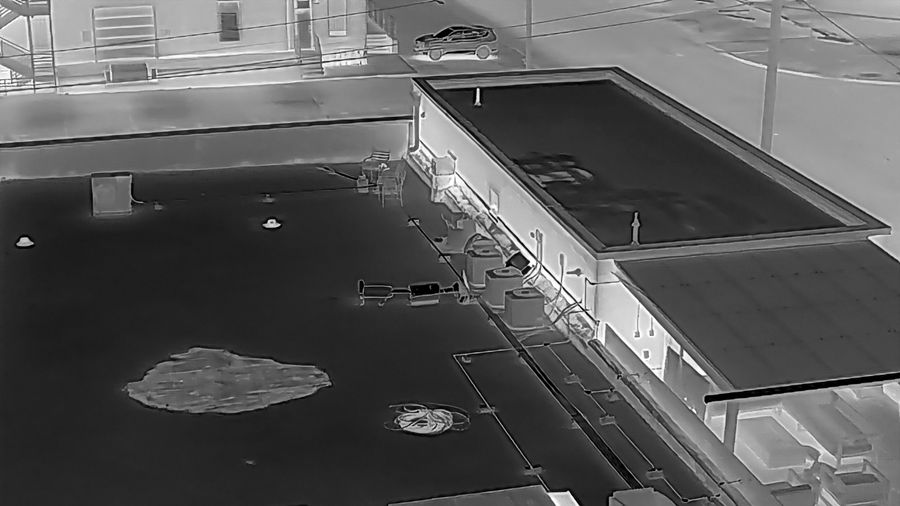
See that bright patch on the roof field? Invisible from the ground and to the naked eye, the classic signature of moisture trapped under the membrane. Caught here, it's a repair. Caught later, it's a tear-off.
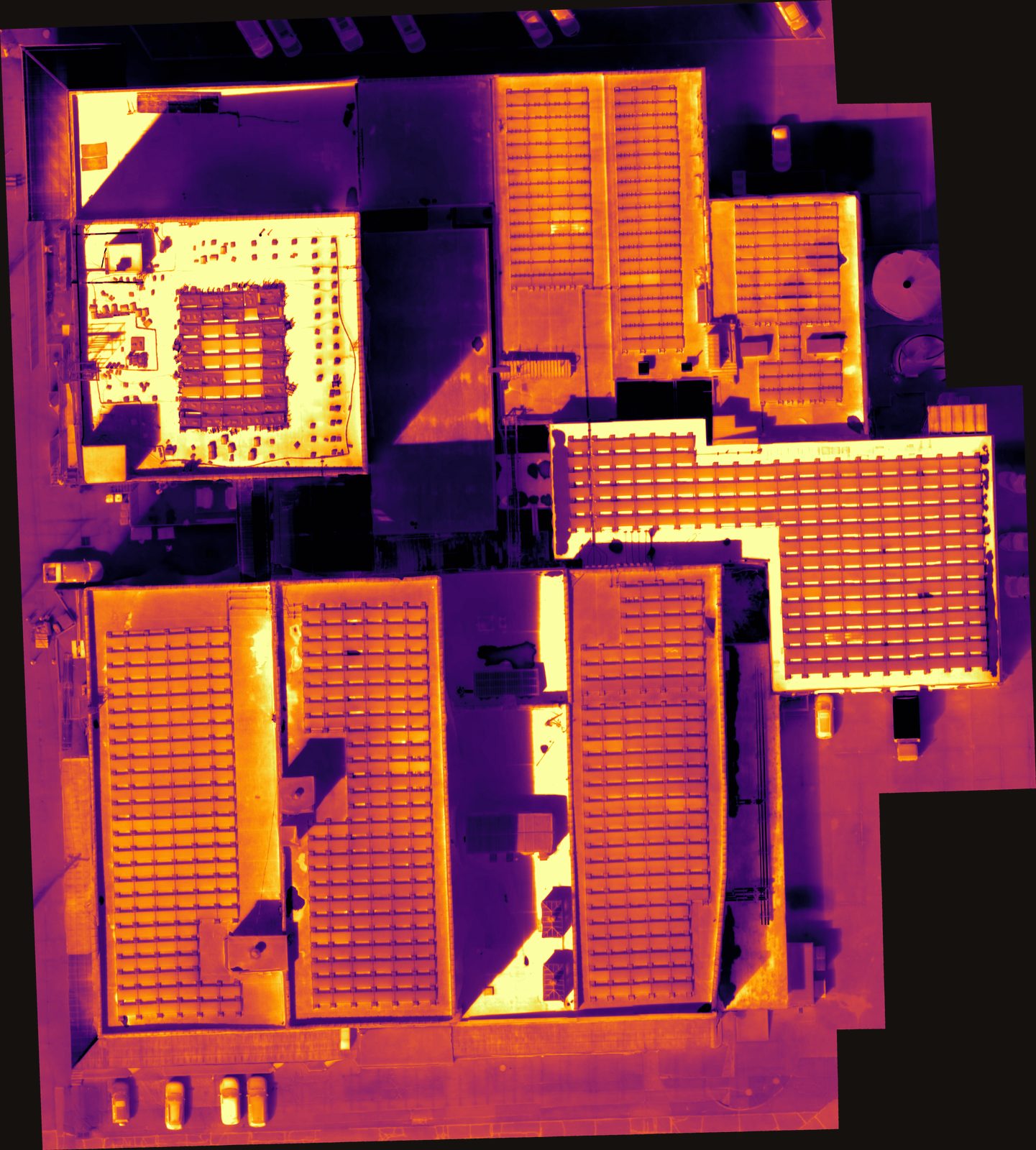
This isn't one photo. It's the whole complex stitched into a single temperature-calibrated map. Every solar panel reads individually, so a dead cell or failing string stands out from its neighbors and you fix exactly the panel that's costing you output.
What thermal finds.
Heat leak
Escaping heat is money out the window. Find it, seal it, cut the energy bill.
Trapped moisture
Water under the membrane rots a roof from the inside. Catch it before a full tear-off.
Solar farm faults
Dead cells and string faults kill output. Spot them from the air, panel by panel.
Power-line hot spots
Overheating connections signal failure ahead. Find them before an outage or fire.
Concrete & new roads
Track curing and cooling temps so slabs, roads, and asphalt set right, no premature cracking.
Towers & equipment
Confirm cell towers and machinery run at safe temps before they fail in the field.
Questions we get a lot.
Why thermal instead of a normal scan?
Moisture and electrical faults are invisible to the eye. Many insurers now want infrared alongside visual. We capture both in one visit.
When's the best time to fly?
We time flights for maximum thermal contrast, often just after sunset or on a clear cold morning, so anomalies read cleanly.